The Fermi paradox: where is everybody?
Nobody knows. The Fermi paradox is the clash between the expectation that an old, vast galaxy should hold many civilizations and the fact that no trace of one has been found; it is named after a question Enrico Fermi asked over lunch at Los Alamos in 1950. The leading answers are that intelligent life is rare, that civilizations are short-lived, distant or quiet, or that searches have covered far too little to tell.
What happened
What is the Fermi paradox? Explained in a sentence, it is the gap between how crowded the galaxy ought to be and how empty it looks. The universe is 13.8 billion years old, the solar system only 4.6 billion, and NASA's count of confirmed planets around other stars passed 6,000 in 2025. Yet no signal, probe or artifact from another civilization has been found. Where is everybody? Nobody knows: several explanations fit the silence, and none has been confirmed.
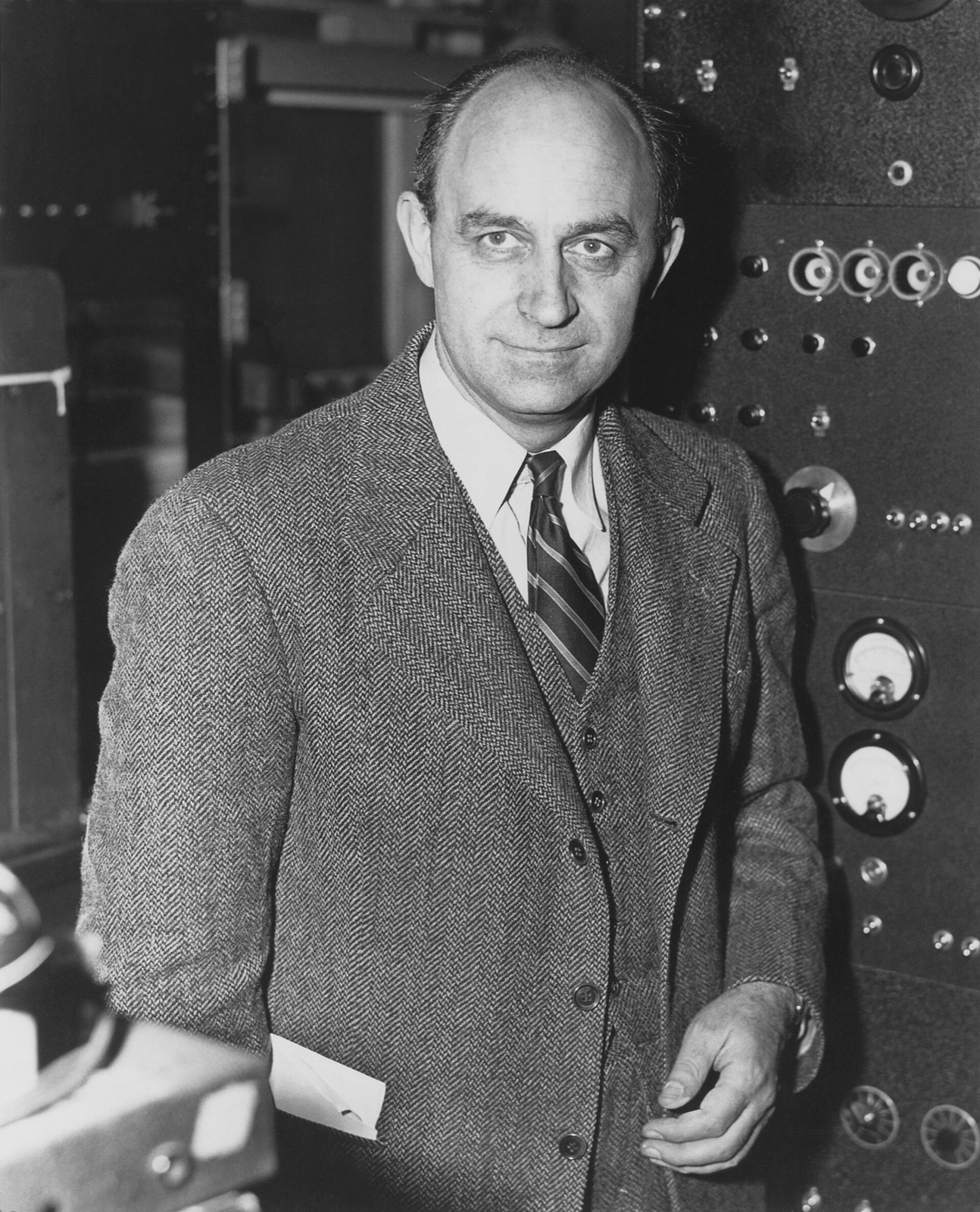
In the summer of 1950 the physicist Enrico Fermi, visiting Los Alamos, New Mexico, walked to lunch at Fuller Lodge with Edward Teller, Emil Konopinski and Herbert York. They talked about flying saucers, and Konopinski mentioned a New Yorker cartoon by Alan Dunn blaming little green men for the trash cans vanishing from New York streets. Fermi quipped that the theory explained two phenomena at once. At the table he suddenly asked where everybody was, and all three knew he meant extraterrestrials.
What witnesses said
The best record is a set of letters. In 1984 Eric Jones of Los Alamos National Laboratory wrote to the three surviving companions (Fermi died in 1954) because the anecdote kept changing with each retelling; the laboratory published their replies in 1985. Konopinski remembered the question as "But where is everybody?", Teller as "Where is everybody?" and York as "Don't you ever wonder where everybody is?" York guessed 1951, but the cartoon, published on May 20, 1950, fixed the date.
The letters also show what Fermi was driving at. Teller recalled that, probably the same day, Fermi asked him how likely it was that clear evidence of an object moving faster than light would turn up within ten years; Teller said one in a million, Fermi about ten percent. York recalled that Fermi then ran quick estimates of the odds of Earth-like planets, life, intelligence and long-lived technology, concluded that Earth should have been visited long ago and many times over, and offered reasons it had not been. York admitted he was hazy on that last part.
How a question became a paradox
The formal version came later. In 1961 Frank Drake wrote an equation as the agenda for a meeting of about a dozen scientists at Green Bank Observatory in West Virginia. It multiplies factors such as the rate of star formation, the share of stars with planets and the lifetime of civilizations to estimate how many detectable civilizations the Milky Way holds. Jones noted that York's account of Fermi's estimates follows the same logic a decade earlier. A 2018 Oxford analysis found that 64 percent of published estimates put that number above 100.
Michael Hart turned the silence into a conclusion in 1975. He argued that any technological species would eventually spread through the galaxy, that a migration could fill it in a few million years, a short time compared with its age, and that since no settlers are here, there are no extraterrestrials. The phrase "Fermi paradox" seems to have first appeared in print in 1977, in a paper by David Stephenson citing Hart. In 1980 Frank Tipler argued that self-replicating machines could explore or colonize the galaxy in under 300 million years.
Examples of proposed answers
Examples of answers to the Fermi paradox fall into a few families. Hart sorted them into four kinds and rejected them all: physical (interstellar travel is not feasible), sociological (others have chosen not to visit), temporal (they have not had time to arrive), and the idea that visitors came but are no longer seen. Fermi's own suggestions, as York recalled them, were that travel may be impossible or not worth the effort, or that civilizations do not last long enough. Teller remembered the thought that Earth lies in a remote part of the galaxy, far from its crowded center.
Later examples extend the list. In a 1998 essay Robin Hanson proposed a Great Filter: somewhere on the path from dead matter to a civilization expanding visibly into space, at least one step is extremely improbable. Whether it lies behind us or ahead matters, which is why he argued that discovering independent life on Mars would be bad news. The dark forest idea, named after The Dark Forest, the second novel in Liu Cixin's Three-Body trilogy, holds that civilizations hide because revealing themselves invites destruction. Astrophysicist Moiya McTier told National Geographic it is among the less compelling answers, because it rests on human-centered assumptions.
Where scientists stand
There is no consensus, but two lines of work make the silence less puzzling. In 2018 Anders Sandberg, Eric Drexler and Toby Ord of Oxford's Future of Humanity Institute argued that the paradox comes from feeding single best guesses into Drake-style equations whose factors are uncertain by many orders of magnitude. Modeling that uncertainty, they put the odds that we are alone in the Milky Way at about even; once the silence is counted, those odds rise to between 53 and 99.6 percent, and to between 39 and 85 percent for the observable universe.
The other line says the search has barely begun. Jason Wright, Shubham Kanodia and Emily Lubar modeled radio searches as an eight-dimensional cosmic haystack and estimated in 2018 that major programs had examined a share comparable to a large hot tub against all of Earth's oceans. Funding has been uneven: Senator William Proxmire cited Tipler in 1981 when he killed NASA's search program, which was revived and then canceled again in 1993.
Is the Fermi paradox real?
It depends on which part is meant. The observation is real: no one has found evidence of another technological civilization. The paradox is disputed. Writing in Astrobiology in 2015, Robert Gray argued that the label is wrong twice over. By the witnesses' accounts Fermi doubted interstellar travel, not the existence of aliens, and Hart's argument rests on unproven assumptions: that interstellar travel is feasible, that the galaxy would fill quickly, and that it would stay settled for millions of years. An incomplete search, Gray added, cannot prove that no one is out there.
Verdict
Real or Legend files the Fermi paradox as unsolved. The history is settled: Fermi asked the question at Los Alamos in the summer of 1950, and his three companions confirmed it in writing. The silence is real too. What it means is not. Intelligent life may be rare, civilizations may be short-lived, distant or hidden, or the search may be too small, and no evidence yet decides between these. Until a search finds something, or covers enough ground for its silence to count, where everybody is remains an open question.
Related videos
Mr & Mrs Gao (老高與小茉) covered this topic. These are links to their original YouTube videos. Unofficial; the views in them are theirs.
Sources
- Los Alamos National Laboratory (via OSTI), 1985-03: Eric M. Jones, "Where Is Everybody?" An Account of Fermi's Question (LA-10311-MS), with letters from Emil Konopinski, Edward Teller and Herbert York
- Astrobiology (author's preprint on arXiv), 2015-03: Robert H. Gray, "The Fermi Paradox Is Neither Fermi's Nor a Paradox", Astrobiology 15(3): 195-199
- Future of Humanity Institute, University of Oxford (arXiv), 2018-06-06: Anders Sandberg, Eric Drexler and Toby Ord, "Dissolving the Fermi Paradox"
- The Astronomical Journal (arXiv preprint), 2018: Jason T. Wright, Shubham Kanodia and Emily G. Lubar, "How Much SETI Has Been Done? Finding Needles in the n-Dimensional Cosmic Haystack", AJ 156: 260
- SETI Institute, 2021-07: Seth Shostak, "Drake Equation"
- NASA, 2025-09-17: NASA's Tally of Planets Outside Our Solar System Reaches 6,000
- Robin Hanson, George Mason University, 1998-09-15: Robin Hanson, "The Great Filter - Are We Almost Past It?"
- National Geographic, 2024-05-23: Robin George Andrews, "What if aliens exist—but they're just hiding from us? The Dark Forest theory, explained"