Who were the Anunnaki? Sumerian gods and the ancient-alien claim
The Anunnaki were gods named in Sumerian and Babylonian religious texts from ancient Mesopotamia, not extraterrestrials. The alien version of the story comes from Zecharia Sitchin's 1976 book The 12th Planet and its claim about a planet called Nibiru, an idea that language scholars and NASA have each checked against the evidence and rejected.
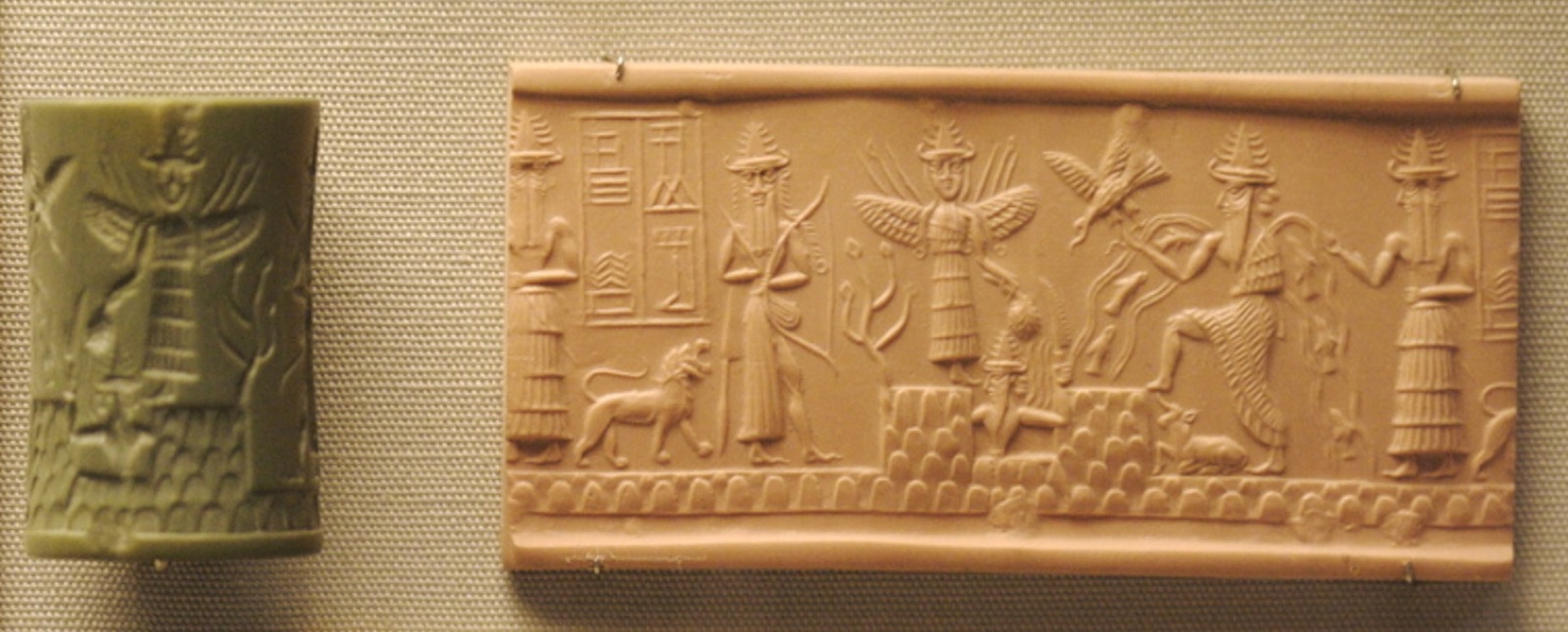
Gods of an ancient pantheon
The Anunnaki were deities named in the myths, hymns and ritual texts of ancient Mesopotamia, the region between the Tigris and Euphrates rivers in what is now Iraq. In that sense they are real: Sumerian and Babylonian scribes wrote about them for roughly two thousand years. What the evidence does not support, according to both language scholars and NASA, is a newer claim attached to that name, that the Anunnaki were extraterrestrial visitors from an undiscovered planet, and that Sumerian writing recorded the visit. That claim, not the ancient religion behind it, is what this record checks.
Judges in a Sumerian myth
One of the clearest Sumerian appearances of the group is in “Inana's Descent to the Nether World,” translated by the University of Oxford's Electronic Text Corpus of Sumerian Literature. When the goddess Inana tries to seize her sister Ereshkigal's throne in the underworld, seven divine judges called the Anuna condemn her: “The Anuna, the seven judges, rendered their decision against her. They looked at her, it was the look of death. They spoke to her, it was the speech of anger. They shouted at her, it was the shout of heavy guilt.” Inana is turned into a corpse and hung on a hook.
From Anuna to Anunnaki
Mesopotamian religion was large and not neat. World History Encyclopedia notes that the Mesopotamian people worshipped between 300 and 1,000 different gods, quoting the Assyriologist Thorkild Jacobsen's description of the divine assembly as simply “legion,” though a handful of deities, among them Anu, Enlil, Enki, Ninhursag, Nanna, Utu and Inanna, dominate the surviving texts.
The same reference describes the Anunnaki as “the Mesopotamian 'fates' and judges of the dead born of the union between Anu and Antu,” a role set against the Igigi, described there as the gods who dwelt in the heavens above the clouds. Usage was not fixed: the pantheon, the same article notes, “were not uniform in name, power, provenance or status in the hierarchy” from one city to the next, and the line between Anunnaki and Igigi shifted along with it.
Zecharia Sitchin's ancient-astronaut claim
In 1976 the author Zecharia Sitchin published The 12th Planet, arguing that Sumerian tablets, in his own translation, described a real planet named Nibiru that he said modern astronomers had missed. A NASA account of the claim describes Sitchin's Nibiru as a planet with “a highly elliptical orbit of the sun” that “enters the inner solar system every 3,600 years,” home to the Anunnaki. That is Sitchin's story, not the one the Sumerian tablets tell.
What the tablets actually say
Michael S. Heiser, a scholar of Hebrew Bible and ancient Semitic languages, examined every cuneiform occurrence of the word Nibiru for his study “The Myth of a Sumerian 12th Planet.” Heiser explained that the term was used two ways: as an ordinary word for a “crossing point” or “ford,” and, in astronomical texts, as a name for the planet Jupiter or Mercury, or for the god Marduk. “Nibiru is NEVER identified as a planet beyond Pluto,” he concluded, adding that the 3,600-year orbit has no support in any tablet: “One either lets the texts tell you what Nibiru is, or one willfully ignores the scribes in favor of Sitchin.”
What astronomers found in the sky
NASA has answered the claim directly. A Goddard Space Flight Center page written to address the 2012 doomsday scare notes that if a planet on a 3,600-year loop through the inner solar system existed, “one of the 100,000 amateur astronomers on Earth would have spotted it long ago.” A dwarf planet beyond Pluto does exist, called Eris, but NASA notes it sits in a stable orbit nowhere near Earth.
Questions people ask
Were the Anunnaki real?
The Anunnaki were real as deities named in Sumerian and Babylonian religious texts, worshipped for roughly two thousand years. What is not supported by evidence is the modern claim that they were extraterrestrial visitors from an undiscovered planet called Nibiru, a claim rejected by both language scholars and NASA.
Verdict
The Anunnaki of Sumerian and Babylonian religion are well documented: real figures in a real literary tradition, gods and judges described across myths like Inana's Descent to the Nether World and the wider Mesopotamian pantheon. The modern Anunnaki legend, Zecharia Sitchin's claim that they were literal extraterrestrials from a planet called Nibiru, is a different matter. Language scholars find no textual basis for it, and NASA's astronomers find no object in the sky to match it. Real or Legend files the ancient-alien claim as debunked; the ancient gods whose name it borrowed are not in question.
Related videos
Mr & Mrs Gao (老高與小茉) covered this topic. These are links to their original YouTube videos. Unofficial; the views in them are theirs.
Sources
- Electronic Text Corpus of Sumerian Literature, University of Oxford: Inana's Descent to the Nether World: translation
- World History Encyclopedia: The Mesopotamian Pantheon: The Ancient Gods and Goddesses of the Near East
- SitchinIsWrong.com: Michael S. Heiser, “The Myth of a Sumerian 12th Planet: Nibiru According to the Cuneiform Sources”
- NASA Goddard Space Flight Center: Nibiru and the 2012 doomsday myth